Our top 8 favorite landline phone designs
Your iPhone is a rectangle. It is the same rectangle as everyone else's rectangle.
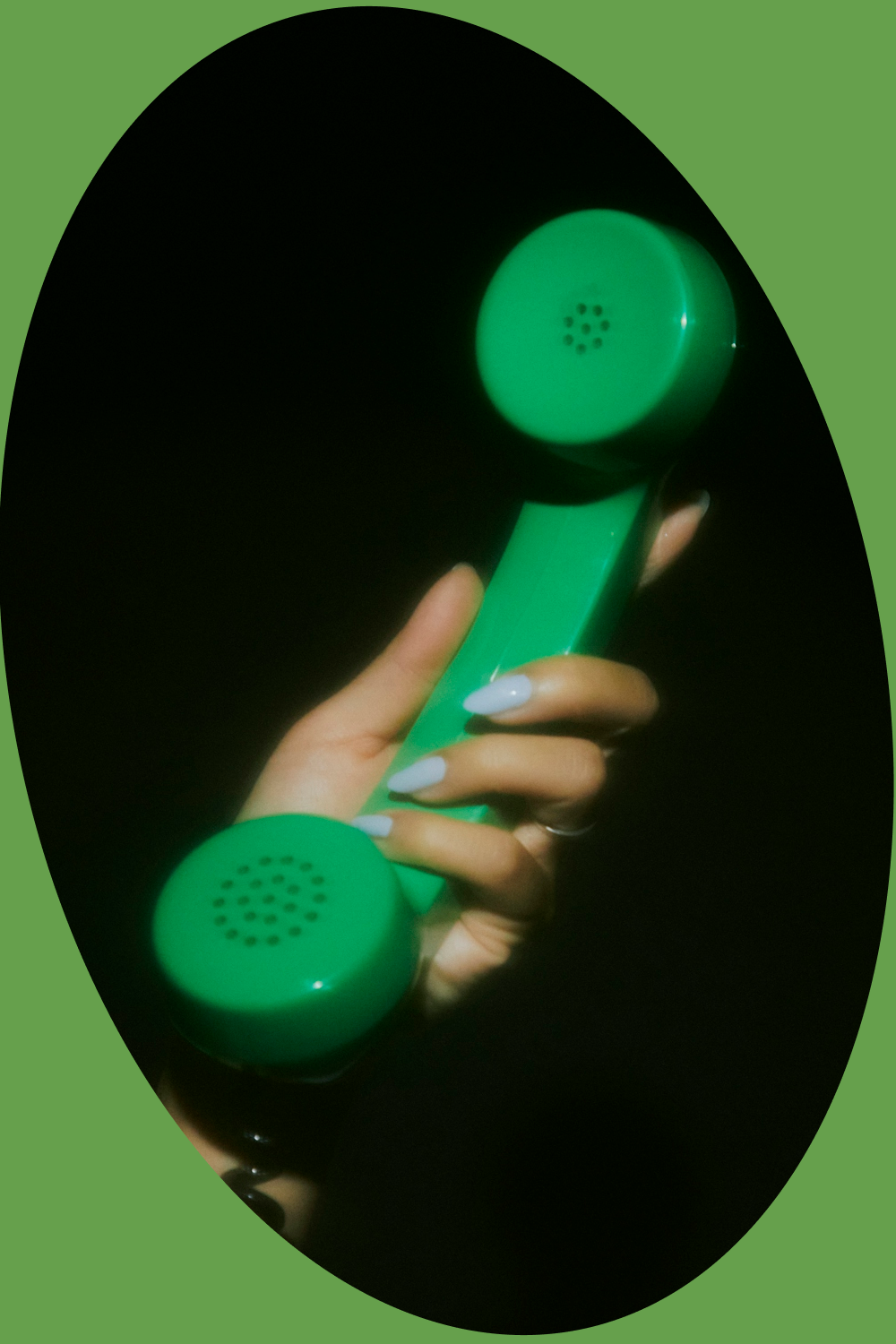
A landline is a decision.
Not a nostalgic one – or not only. Something stranger is happening with the landline revival: people are realizing that the thirty years between 1950 and 1980 produced telephone designs of extraordinary quality, objects that were resolved in ways that consumer electronics haven't been since. Industrial designers were asked to solve a hard problem – what should a telephone feel like, how heavy should it be, what colors should it exist in – and they solved it with real creativity. Those solutions are still sitting at estate sales, still cheap, still working.
Here are eight worth knowing about.
A quick note on buying
Vintage phones are easy to find and unevenly priced. Estate sales and antique malls are the best starting points – the supply is enormous because almost every household had one, and most of them still work. For phones you want to actually use rather than display, look for ones described as "tested and working" and check compatibility with your phone service, since VoIP setups handle rotary dials differently than traditional landlines.
One insider note: estate sales in houses built before 1970 are particularly good hunting ground – these homes were often furnished once and never significantly updated, which means the phones were kept, used, and cared for.
eBay is useful once you know what you're looking for. The Tin Can Co. and Grand Phone Co. are contemporary manufacturers worth bookmarking if you want the look without the uncertainty.
1. Ericofon "Cobra"
Sweden, 1954 – LM Ericsson
The Cobra is a single-piece handset: the dial is in the base, you pick it up and it's already in your hand, already aimed at your face, already shaped like something that belongs in a design museum – which it does, in several. LM Ericsson made it for twenty years and it became a status symbol in Scandinavia before it became a collector's object everywhere else. Available in colors that feel chosen rather than defaulted – a particular coral, a turquoise that reads as neither vintage nor contemporary. Of everything on this list, this is the one most likely to stop someone mid-sentence.
Find them on eBay; budget $80–$200 depending on color and condition. The coral ones command a premium. Worth it.
2. Western Electric Model 500
USA, 1949 – Henry Dreyfuss Associates
The phone that defined what a phone looked like for thirty years. Henry Dreyfuss and his team designed it with ergonomic seriousness unusual for consumer objects at the time – they studied how people actually held phones, where hands naturally went, what handset weight felt right. The result stayed in continuous production until the 1980s, and the supply is essentially endless. In the original colors – ivory, black, beige, that specific red – it is as resolved an object as exists in American industrial design history.
Estate sales. Cheap. Works.
3. Trimline
USA, 1965 – Henry Dreyfuss for Bell Telephone
Dreyfuss again, solving the desk phone for a generation that wanted things smaller and cleaner. His solution: move the dial into the handset. A slightly strange decision that produced something elegant – the Trimline is slim, forward-leaning in its silhouette, and looks best in avocado or harvest gold, two colors the 1970s were completely right about. If you find one in working condition in an unusual color, buy it without deliberating.
4. Trimphone
UK, 1965 – Martyn Rowlands for GPO
Same year as the Trimline, different country, completely different answer. Where the Trimline is slim and horizontal, the Trimphone is upright and slightly alien – a shape that reads as mid-century and futuristic simultaneously. It came in a range of colors, the best of which is a specific green-grey with no official name. Less common in the US than the Western Electric models, which is the point. The search takes longer. The find is better.
5. Alessi "Telephone Troll" by Philippe Starck
1996
Starck designed a phone for Alessi that looks like a cartoon character crossed with a prop from a film noir – slightly menacing, fully committed to its own joke. This is a phone for the shelf that already knows exactly what it is and wants to push it. One per room, maximum. One per life, honestly.
Find on Chairish or 1stDibs. The price has stayed reasonable because it's polarizing, which is how you know it's interesting.
6. Bang & Olufsen Beocom 2
Denmark, 2004
Wall-mounted, aluminum, designed with the same philosophy B&O applies to everything: the technology inside the object should become irrelevant. The Beocom 2 is a sculpture that takes phone calls. It belongs flat against a kitchen or hallway wall, somewhere it can do both its jobs without either suffering. Not cheap, not easy to find, worth both.
7. Tin Can Co. rotary dial phone
Contemporary
A small British manufacturer producing working rotary phones with period-accurate exteriors and modern-compatible internals. The responsible choice if you want the real thing and also want it to function with your current setup. Their phones come in matte colors that don't apologize for the rotary dial, and they ring – an actual bell – which turns out to matter more than expected.
Available direct from tincanphone.com. Delivery from the UK; budget two to three weeks.
8. The one from the estate sale
No designer. No model number. A mid-century handset in a color that doesn't appear in any catalog – not quite seafoam, not quite grey – with a cord that still has some curl left in it. These exist at estate sales and antique malls with regularity, and the right one stops you. You pick it up and it's heavier than expected, and the weight is correct. You don't know whose kitchen it came from.
That's fine. It's yours now.